Connections to Prior Knowledge
-
WAR Card Game Modified for Height Comparision
Comparing numbers is very challenging for some students and likely speaks to a major gap in their number sense. It is also very challenging to address effectively with these students. The photo below shows an entry point into I have used with success in helping such a student. Even for these struggling students, taller and…
-
Superhero Math

-
Making Proportions Meaningful (and Therefore Accessible)

-
Velocity, Acceleration, Speeding Up and Slowing Down

DISCLAIMER: This is a very mathy, math geek post but it also has value in demonstrating instructional strategies and multiple representations. We all understand speed intuitively. Velocity is speed with a direction. Negative in this case does not indicate a lower value but simply which way an object is traveling. Both cars below are traveling…
-
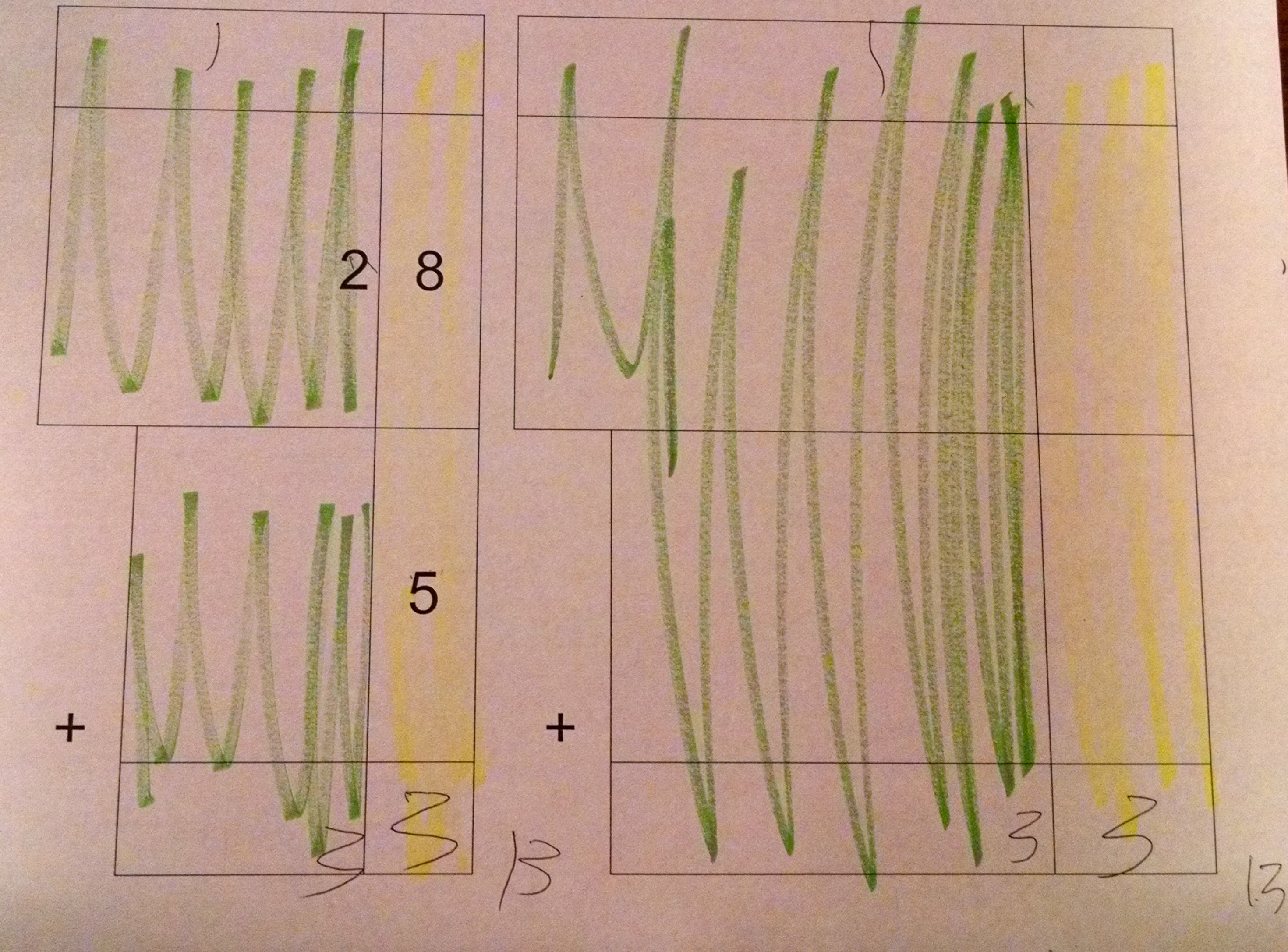
Adding ones digits in 2 digit numbers with carrying
-
The I in Instruction can be the same I in IEP and IDEA.

I am consistently surprised by the reliance on canned items for students who struggle. There are different reasons students struggle but we know that there are secondary characteristics and factors that inhibit effective information processing that can be addressed with some Individualization. In a math intervention graduate course I teach at the University of Saint Joseph,…
-
More Than: Concept and Symbol

The alligator eats the bigger number is the common approach for student to use inequality symbols (< > < > ). I find that students remember the sentence but many do not retain the concept or use the symbols correctly, even in high school. This post presents an alternative approach. Alligator Method The reason, I believe, is…
-
Sausage Fractions – Real Life Example

-
Common Denominator – Why?
-
Concepts vs Skills – Need Both

In general math is taught by focusing on the steps. Conduct a Google search for solving equations and you will see the steps presented (below). You need a video to help your student understand solving and you typically get a presenter standing at the board talking through the examples. (I’ve posted on my approach to…