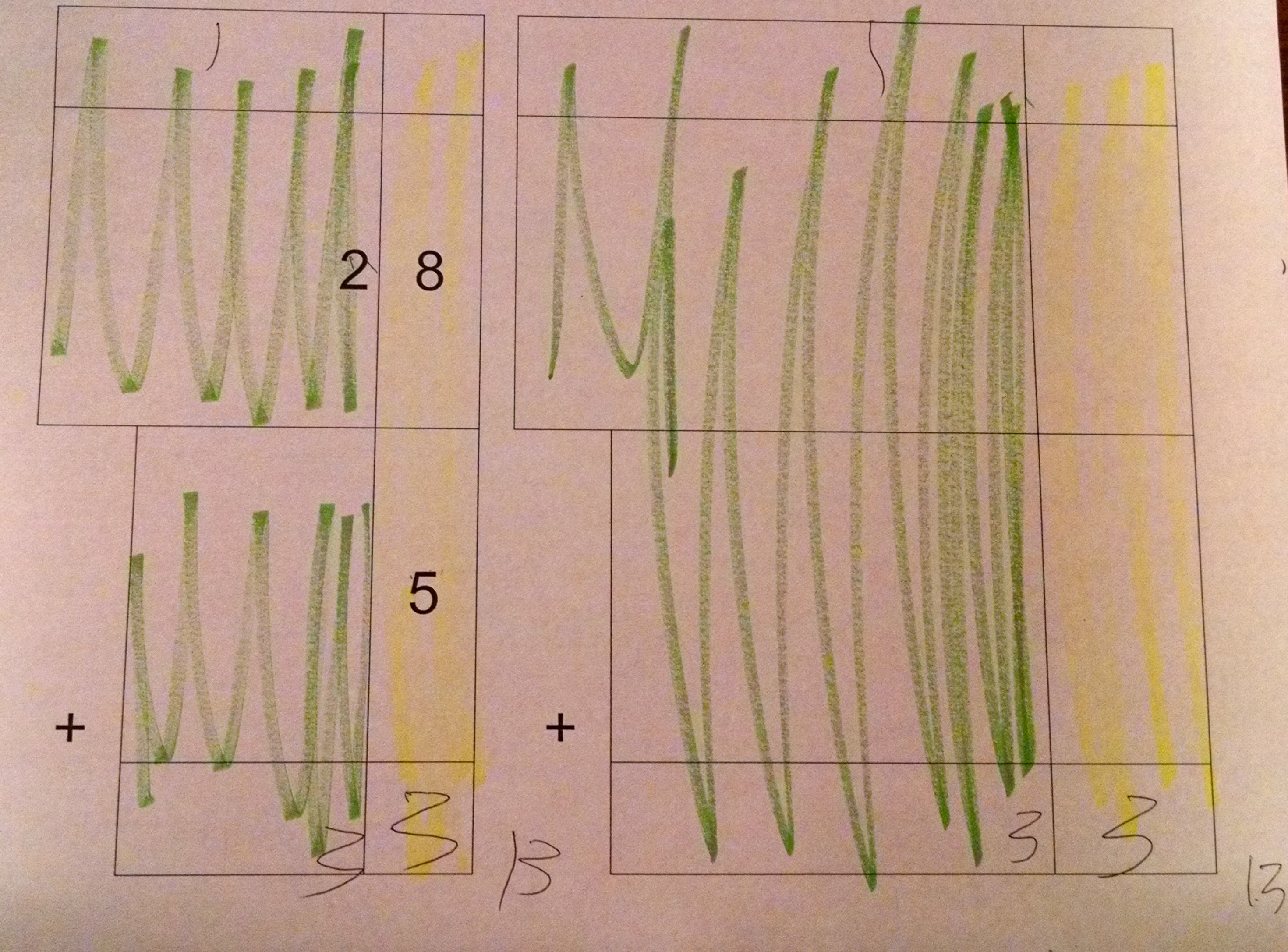
A major obstacle in math for many students with special needs is carrying in addition problems. Below is a task analysis approach.
First, I target the step of identifying the ONES and TENS place in the 2 digit sum in the ONES column (below it is 12). In a scaffolded handout I create a box to for the sum with the ONES and TENS separated. At first I give the sum and simply have the student carry the one.

Then I have the student find the sum and write it in the box (14 below). Once mastered I have the student write the sum and carry the 1.

They would have mastered adding single digit numbers before this lesson. I revert back to single digit numbers to allow them to get comfortable with writing the sum off to the side without the scaffolding. (In the example below I modeled this by writing 13.)

The last step is to add the TENS digits with the carried 1. I use Base 10 manipulatives to work through all the steps (larger space on the right is for the manipulatives) and have the student write out each step as it is completed with the manipulatives.

Finally, the student attempts to add without the scaffolding. I continue with color but then fade it.

One response to “Adding ones digits in 2 digit numbers with carrying”
[…] For new teachers I use a formal task analysis approach to teach candidates how to cut up the math into bite-sized pieces. A task analysis for the problem above was an assignment given to a group of graduate level special ed candidates. As is common, they overlooked many simple little steps hidden in the problem. These steps are hidden because they are so simple or so automatic in our brains that we don’t think about them. See below for how I break this topic into several pieces or steps. For example, before even starting the addition the person doing the problem has to identify that 43 is a 2-digit number with 4 in the TENS place and 3 in the ONES place. Understanding that the problem is addition which entails pulling the numbers together to get a total (sum) is an essential and overlooked step. If a student struggles with a step the step can be addressed in isolation, as I show in another blog post. […]