algebra
-
Inclusion vs Proximity
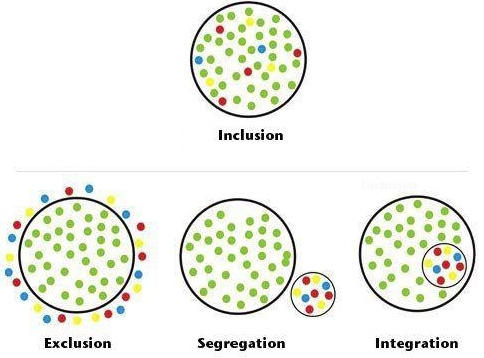
Some educators and parents of students with special needs are unclear about what is meant by the term inclusion. Some think it is having the student with a disability in the same location as “nondisabled peers.” Some think it involves doing the same exact tasks or academic work. Sesame Street figured this question out years…
-
Plotting Points Introduction
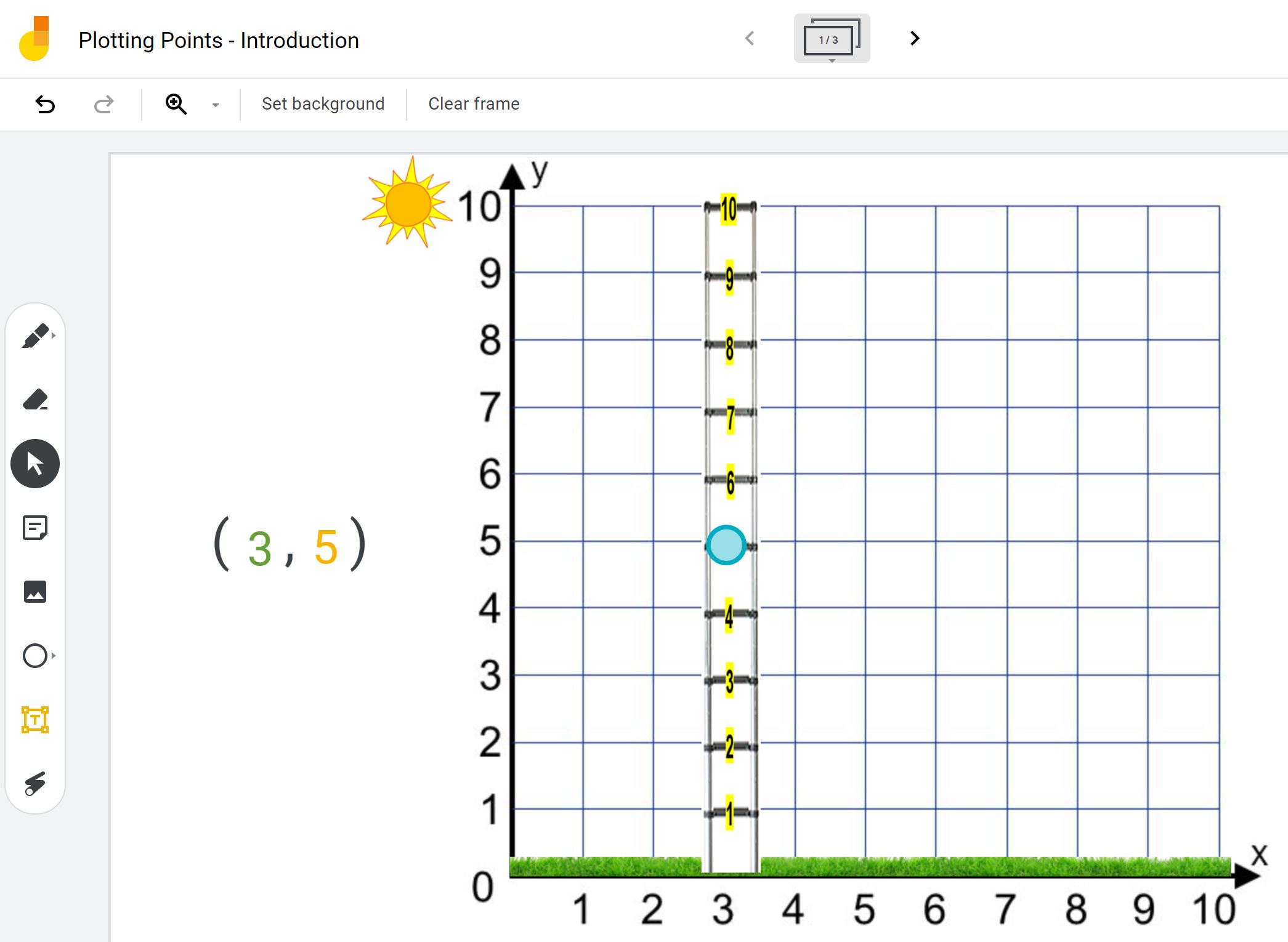
Plotting points is surprisingly challenging for some students. Here is an approach originated by one of my former math teacher candidates in a methods class I taught. This approach uses the analogy of setting up a ladder. First, determine where to position the ladder, then climb the ladder. (brilliant and not my idea). Plot the…
-
Plotting Points Introduction
Plotting points is challenging for some students, even in high school. This approach uses the analogy of setting up a ladder for the x-value and climbing the ladder for the y-value. Jamboard with Ladder This activity is conducted on a Google Jamboard with moveable objects (see photo at the bottom on how to access it).The…
-
Intro to Reading Scatterplots – Used Mustangs

One step in reading and analyzing scatterplots is simply identifying what the dots on the graph represent. If students do not understand the dots (including the position) how can they analyze. An approach I have used is start by having students create their own scatterplot for mileage and price of used cars they shop for…
-
Reading Scatterplots with Ford Mustangs
One step in reading and analyzing scatterplots is simply identifying what the dots on the graph represent. Students who do not understand the meaning of the points, including the position, will struggle to interpret the graph. This post outlines a Jamboard activity to support interpretation of the points. Overview I present the scatterplot of used…
-
Introduction to Linear Functions – Buying a Used Car

-
Intro to Systems of Equations: Camry vs Mustang Depreciation
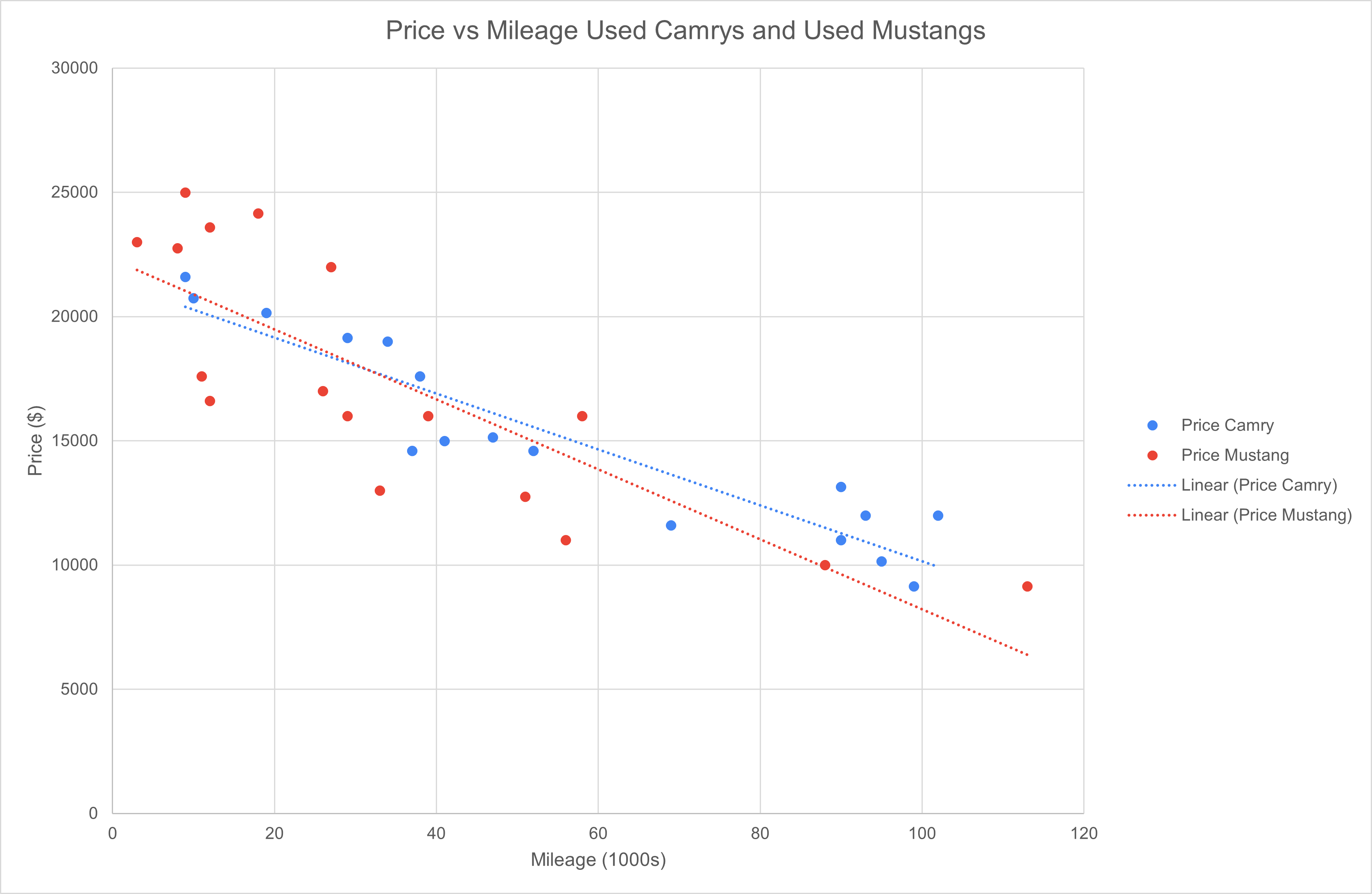
The scatterplot above is an approach I use to introduce systems of equations. Here is the process I use. (Note: I have found that students like math associated with buying a car – relevant, real life application for them.) In my class, students would have seen a scatterplot with mileage and price for a single…
-
IXL.com – Excellent Tool for Differentiation

IXL.com is a site that provides online practice for math (and other topics). It has a hidden feature that allows for very effective differentiation. This can be highly useful in a general ed math class and in settings for special education services. This includes special ed settings with students working on a wide ranges of…
-
Handouts for Multiplication and Unit Rate Word Problems

Here are excerpts from two handouts I use to help students understand how to write multiplication and rate word problems as math expressions. The image, below at top, shows a problem from the first handout I present. The students draw a single group represented by the rate expression (for elementary school word problems the term…
-
Slippery Slope – 3rd Grade Multiplication Word Problems to Slope in Algebra

Top left is a scaffolding I use to help students learn to solve math problems using multiplication (3rd grade). The situations are typically rate problems (e.g., 5 pumpkins per plant or $2 per slice of pizza) although the term “rate” is not used yet. The same concept of rate plays out in high school with…