solving
-
Solving 2-Step Equation Scaffolded
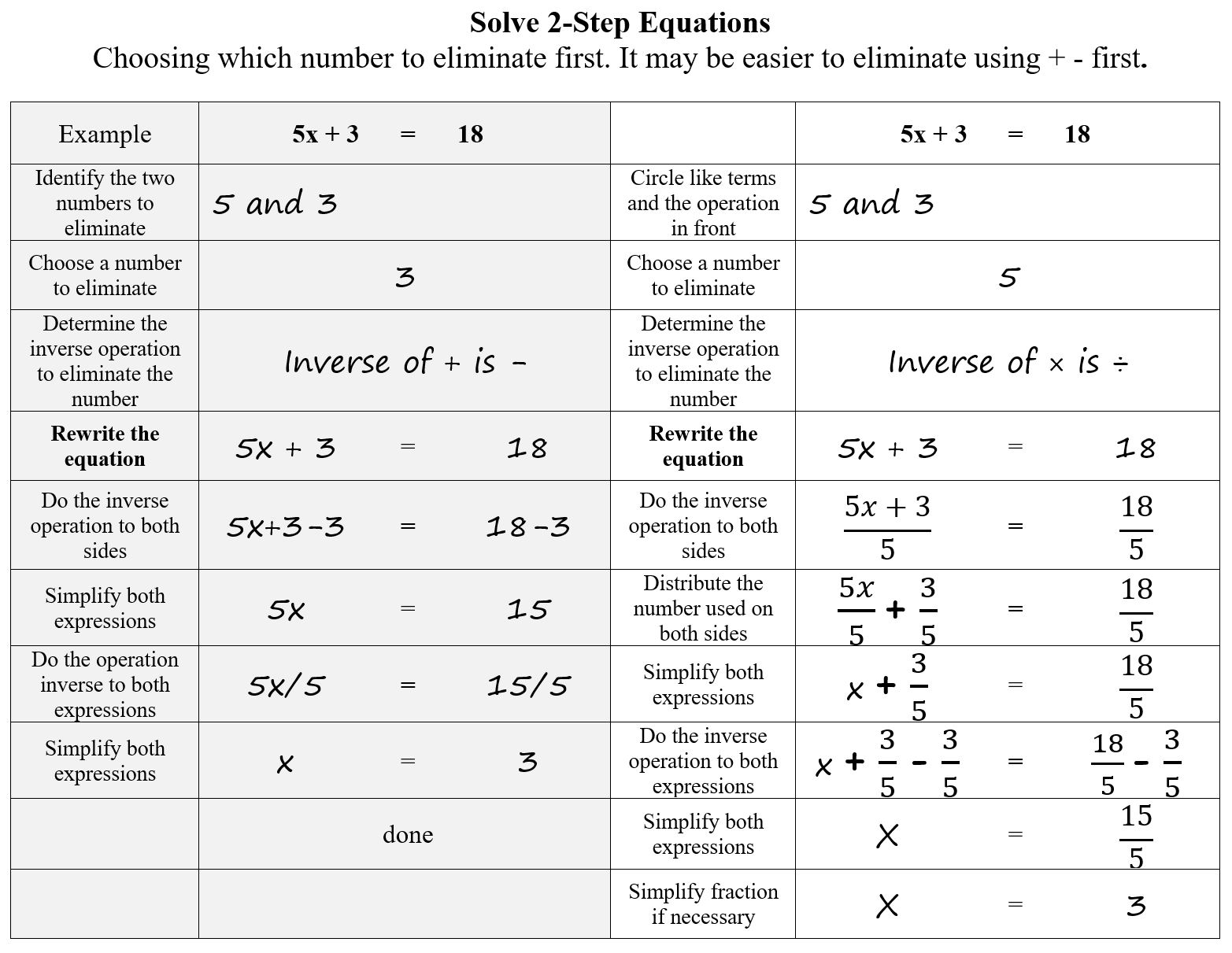
Solving 2-step Equations is an escalation in terms of task demand. Starting in elementary school, they are exposed to math sentences in which there is a single operation. Now they are asked to choose a number to eliminate. This post provides details about a scaffolded handout. It addresses the choice of number to eliminate and…
-
Intro to Solving Equations – Seesaws and Oranges

-
Solving Equations – Scaffolded Handouts
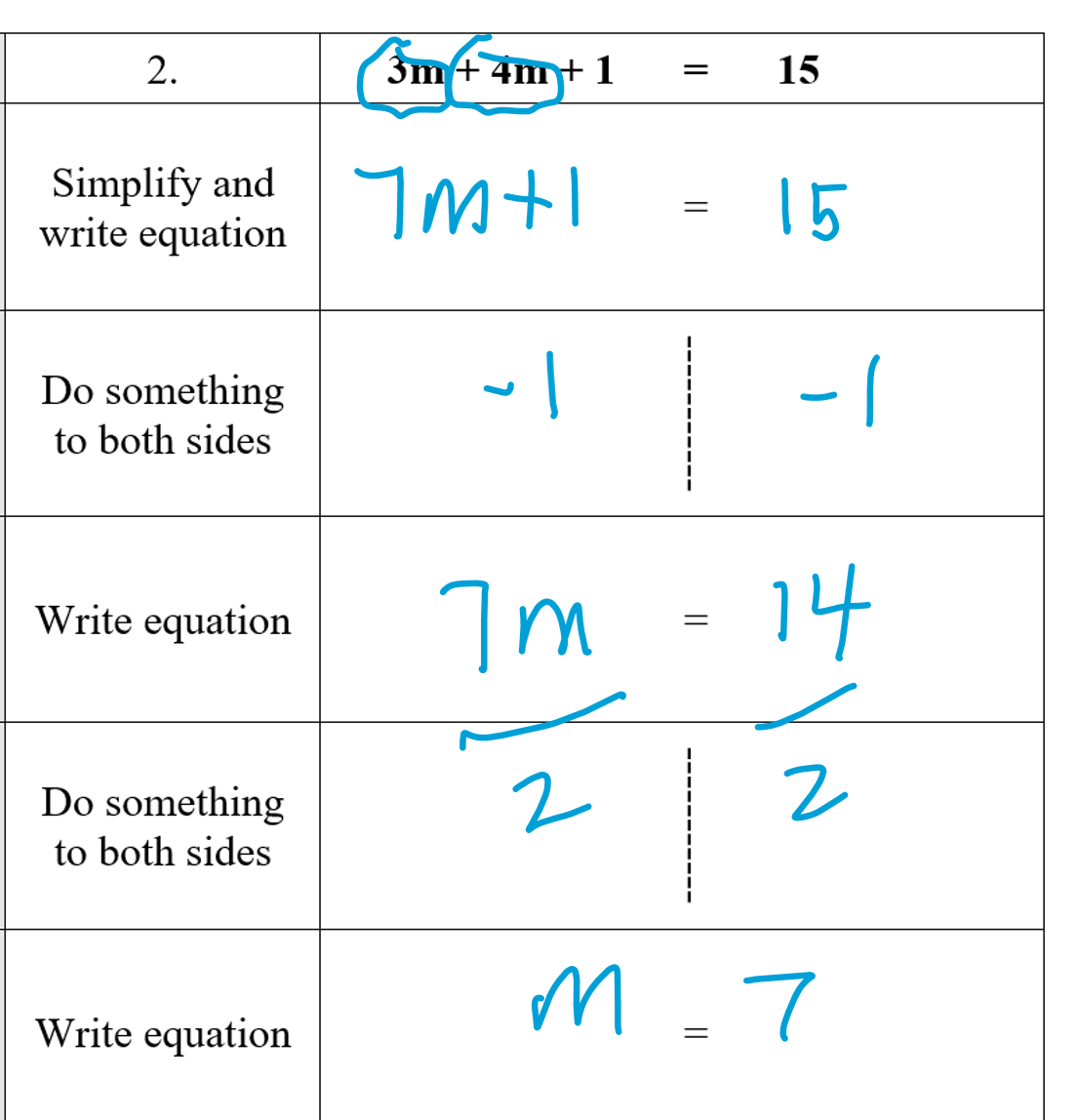
There are several layers to solving equations that can be unpacked using a task analysis approach. This includes written and mental steps (such as what we teachers mean when we tell a student to do the same thing to “both sides of the equation”). Here is how I develop the concept of equations and solving.…
-
Concepts vs Skills – Need Both

In general math is taught by focusing on the steps. Conduct a Google search for solving equations and you will see the steps presented (below). You need a video to help your student understand solving and you typically get a presenter standing at the board talking through the examples. (I’ve posted on my approach to…
-
Introduction to Solving Equations
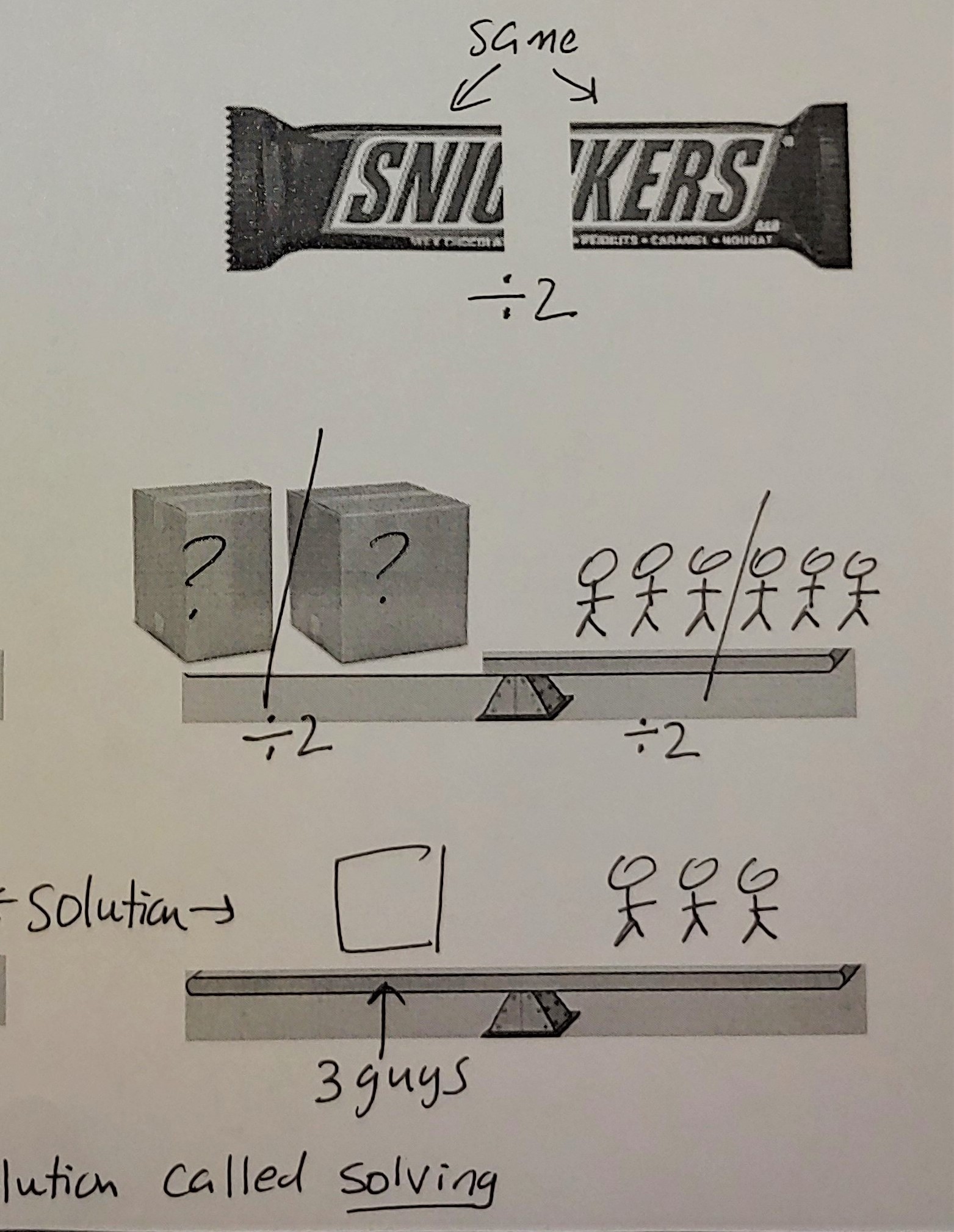
I introduce solving equations by building off of the visual presentation used to introduce equations. The two photos below show an example of handouts I use. Below these two photos I offer an explanation of how I use these handouts. First I develop an understanding of a balanced equation vis-a-vis an unbalance equation using the…
-
Introduction to Equations – (Meaning Making)

This is a meaning making approach to introducing equations. I will walk through the parts shown in the photo in the space below this photo. (A revised edition of this handout will be used in a video on this topic.) First I explain the difference between an expression (no =) and an equation (has =).…
-
Example of Using Support Class to Support Current Math Content

I have posted on how to effectively provide support for current math topics. Here is an example (below) of how support can focus on both the current topic and prerequisite skills. For example, on the 22nd in this calendar the current topic is solving equations. The steps for solving will include simplifying expressions and may involve…
-
Conceptual Understanding Before Getting “Mathy”
All too often math topics are introduced first with the skills and steps. This is backwards. The photo above shows how I introduced solving equations a high school student with autism using the concept as an entry point. We discussed what was involved in buying a car, including payments (no interest) then I posed the…
-
CRA for Solving Equations
This is a photo of a handout from a special ed conference shared by Dr. Shaunita Strozier (sstrozier@valdosta.edu) of Valdosta State University. It shows the use of algebra tiles to provide a concrete level of the concept of an equation and solving the equation. The photos on the left show the R or representational level of the…