scaffolded handout
-
Multiplying by 6, 8, 9
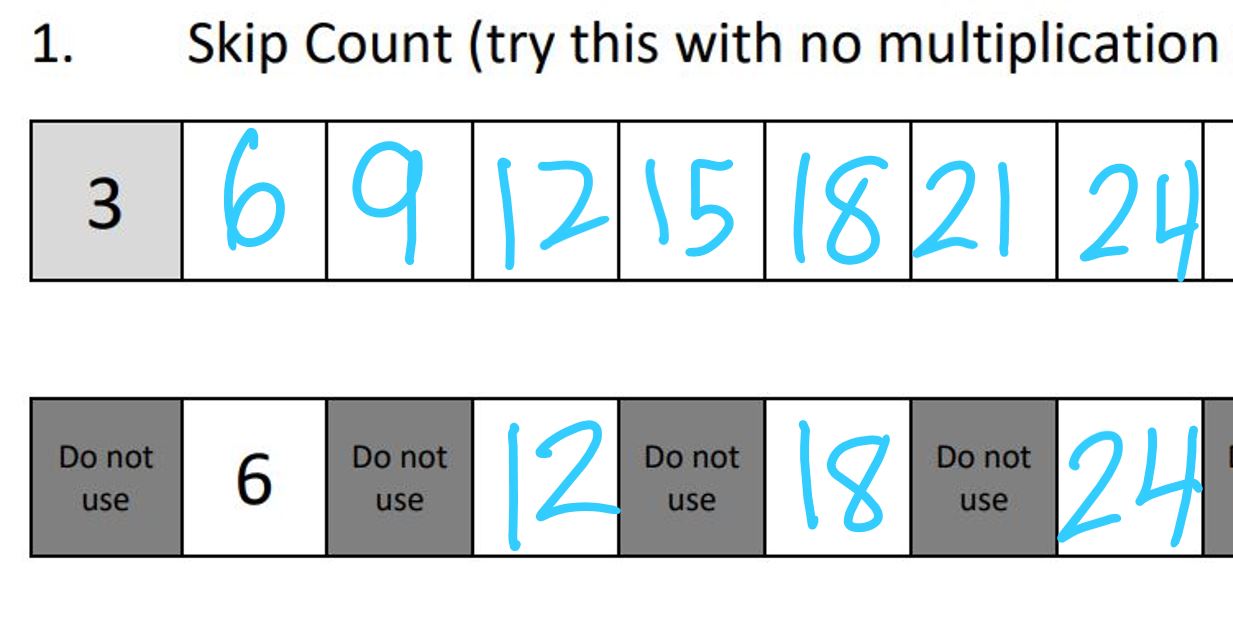
If you find this helpful, maybe consider making a small donation to help build an accessible playscape for children with disabilities. I have found success with students using a double skip method for 6s and 8s. The 6s use every other 3 and the 8s, every other 4. Below is how I scaffold the process…
-
Inclusion vs Proximity
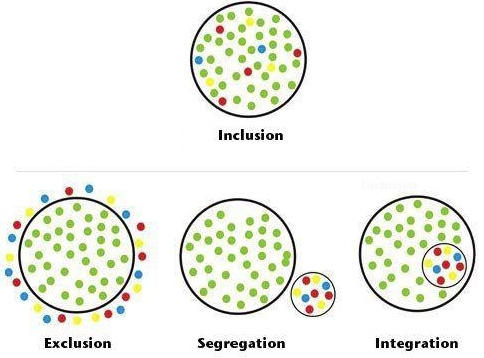
Some educators and parents of students with special needs are unclear about what is meant by the term inclusion. Some think it is having the student with a disability in the same location as “nondisabled peers.” Some think it involves doing the same exact tasks or academic work. Sesame Street figured this question out years…
-
Introduction to Linear Functions – Buying a Used Car

-
Handouts for Multiplication and Unit Rate Word Problems

Here are excerpts from two handouts I use to help students understand how to write multiplication and rate word problems as math expressions. The image, below at top, shows a problem from the first handout I present. The students draw a single group represented by the rate expression (for elementary school word problems the term…
-
Simplifying not so Simple Equation Solving
-
Learning Math – The Patting Head and Rubbing Belly Phenomena

In education, math especially, there exist a learning situation I call the patting head and rubbing belly phenomena. In this phenomena students are presented a math problem that consists of several steps they know how to do and then maybe one or two additional steps that are new. Adding the additional step is like adding…
-
Solving Equations – Scaffolded Handouts
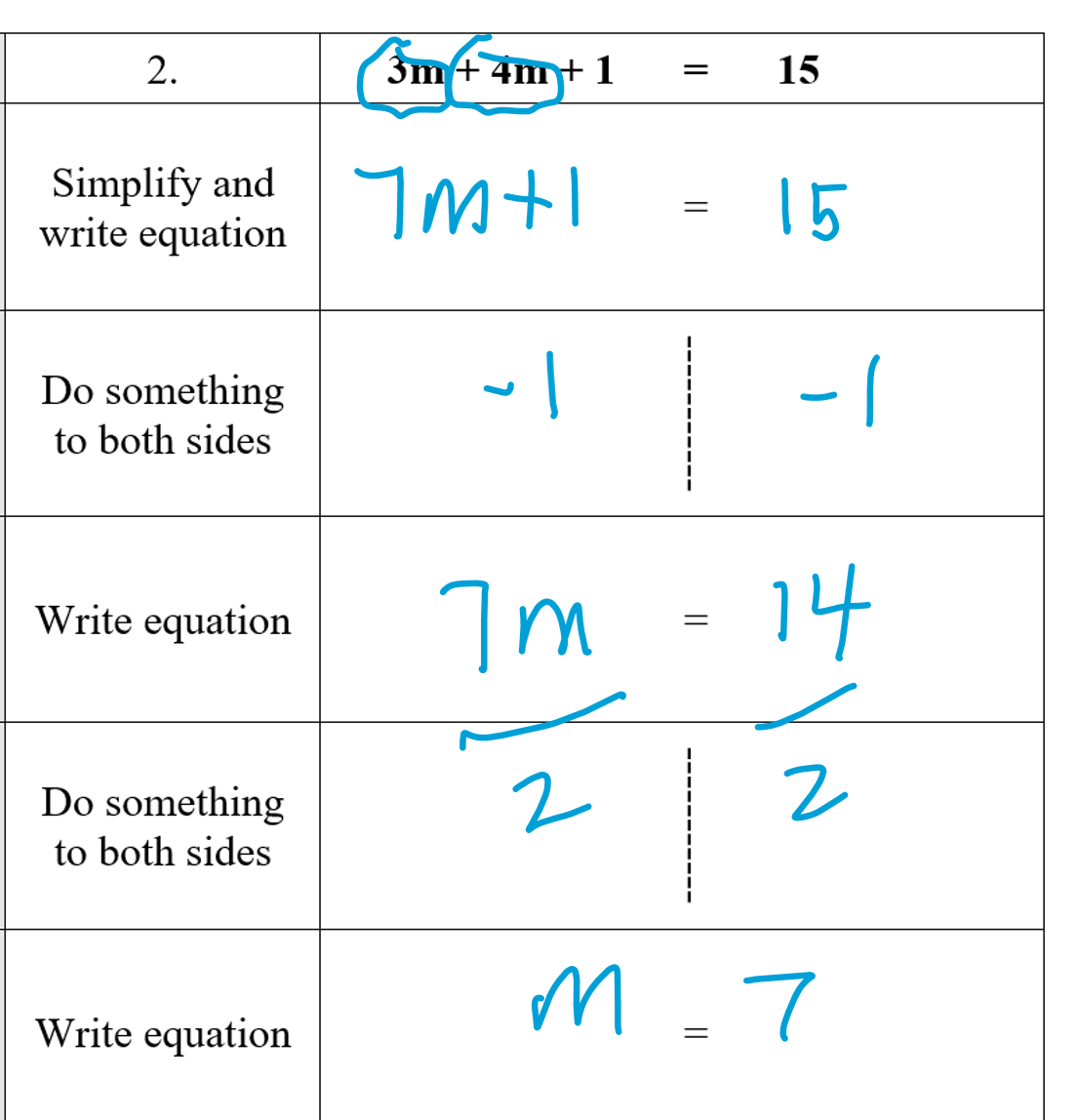
There are several layers to solving equations that can be unpacked using a task analysis approach. This includes written and mental steps (such as what we teachers mean when we tell a student to do the same thing to “both sides of the equation”). Here is how I develop the concept of equations and solving.…
-
Sales Price Entry Point
A pseudo- concrete representation of a sales price problem is shown below. This is what I use as an entry point for teaching these problems. The entire shape represents the total price of $80. This is 100%, which in student language is “the whole thing.” The discount rate is 25%. Cut with scissors to lop…
-
Introduction to Solving Equations
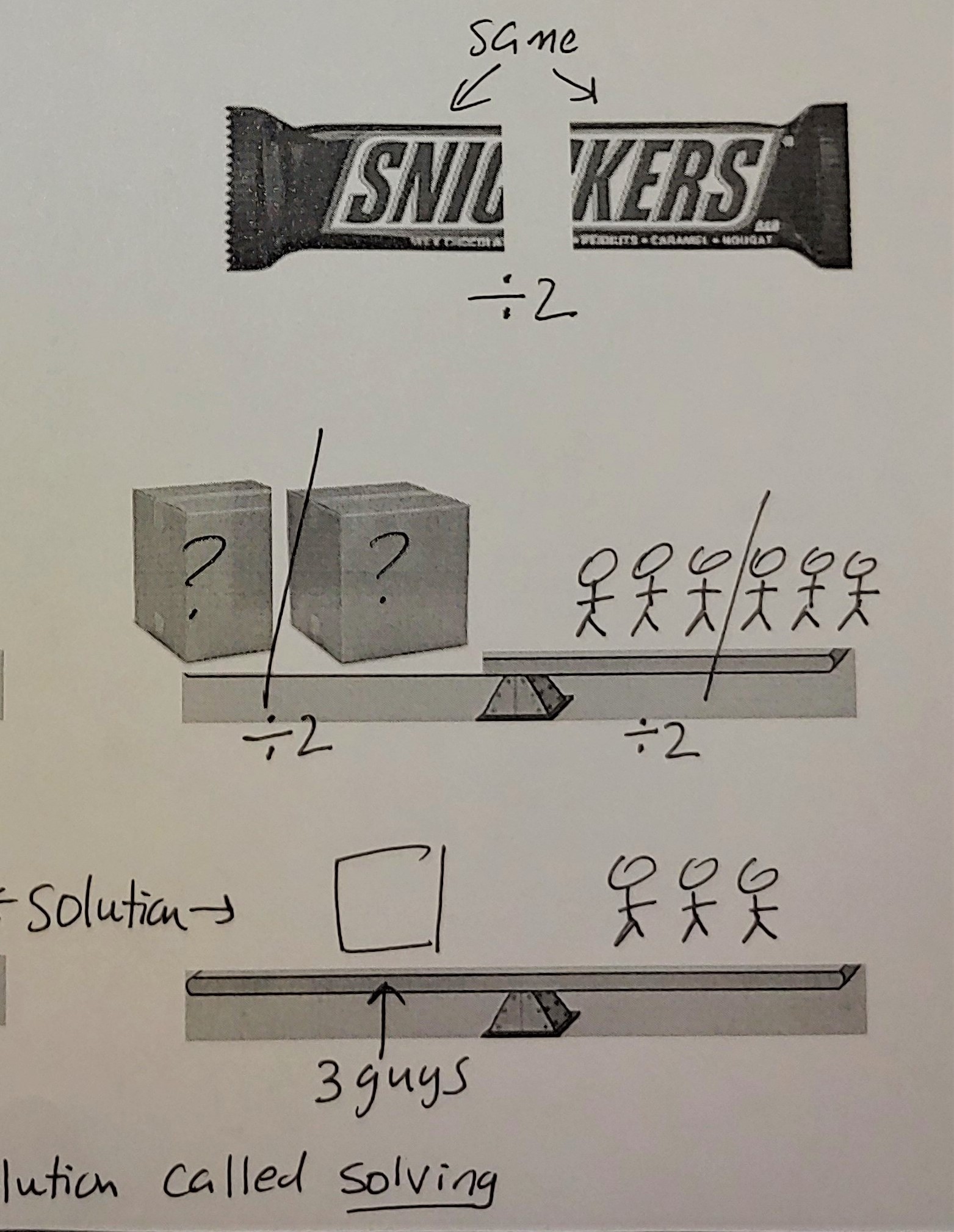
I introduce solving equations by building off of the visual presentation used to introduce equations. The two photos below show an example of handouts I use. Below these two photos I offer an explanation of how I use these handouts. First I develop an understanding of a balanced equation vis-a-vis an unbalance equation using the…
-
Elapsed Time Scaffolded
