money
-
Counting Money at the Store

-
Intro to Reading Scatterplots – Used Mustangs

One step in reading and analyzing scatterplots is simply identifying what the dots on the graph represent. If students do not understand the dots (including the position) how can they analyze. An approach I have used is start by having students create their own scatterplot for mileage and price of used cars they shop for…
-
Reading Scatterplots with Ford Mustangs
One step in reading and analyzing scatterplots is simply identifying what the dots on the graph represent. Students who do not understand the meaning of the points, including the position, will struggle to interpret the graph. This post outlines a Jamboard activity to support interpretation of the points. Overview I present the scatterplot of used…
-
Intro to Systems of Equations: Camry vs Mustang Depreciation
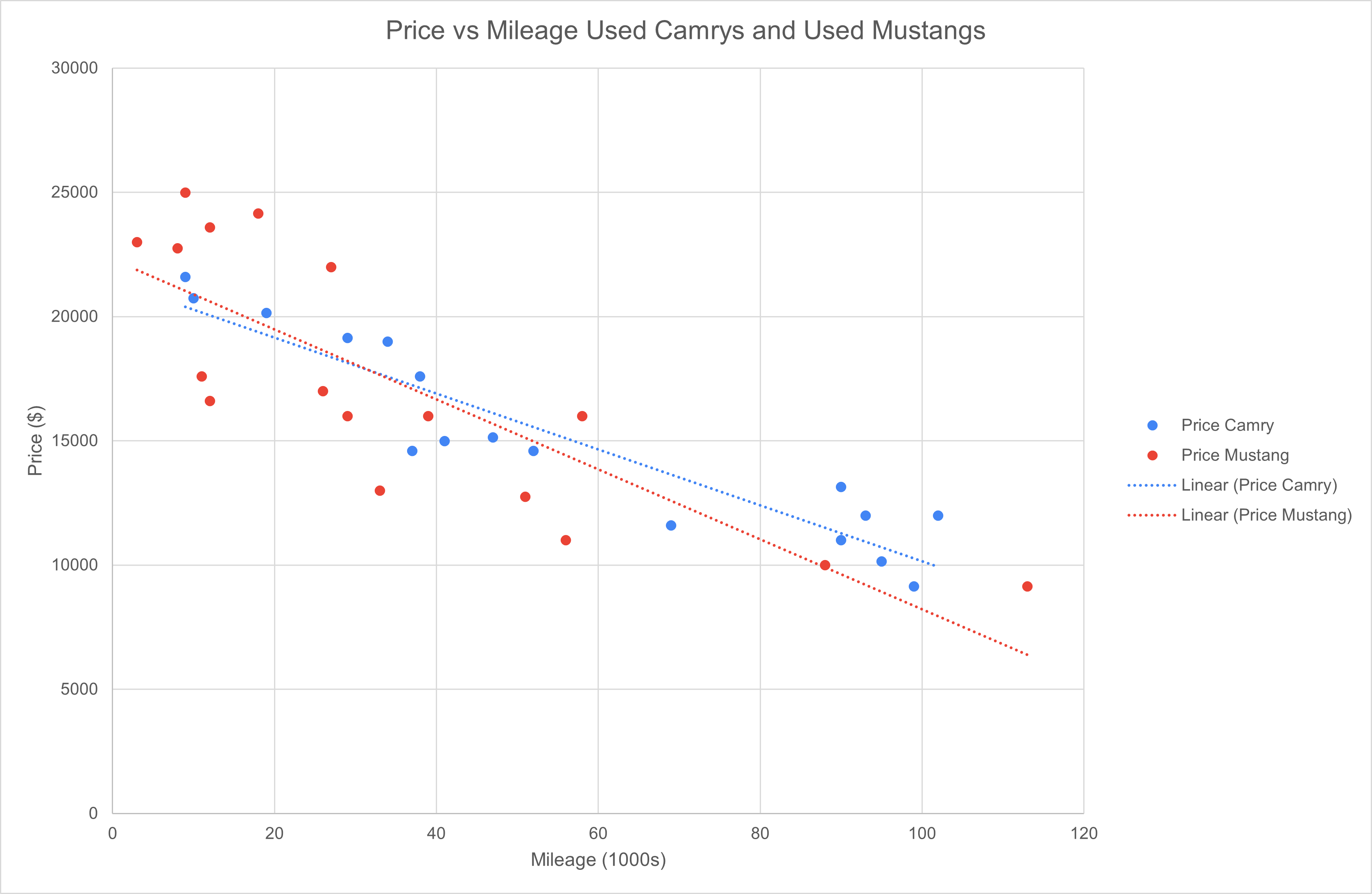
The scatterplot above is an approach I use to introduce systems of equations. Here is the process I use. (Note: I have found that students like math associated with buying a car – relevant, real life application for them.) In my class, students would have seen a scatterplot with mileage and price for a single…
-
Monthly Budget Project

The images shown are excerpts from the latest iteration of a budget project I have used for years. The content addressed in this project can be used as stand alone activities and are relevant real life examples for our students. Even the younger students could benefit, e.g., learning addition by shopping for items online and…
-
Multiplication with Integers: a Meaning Making Approach
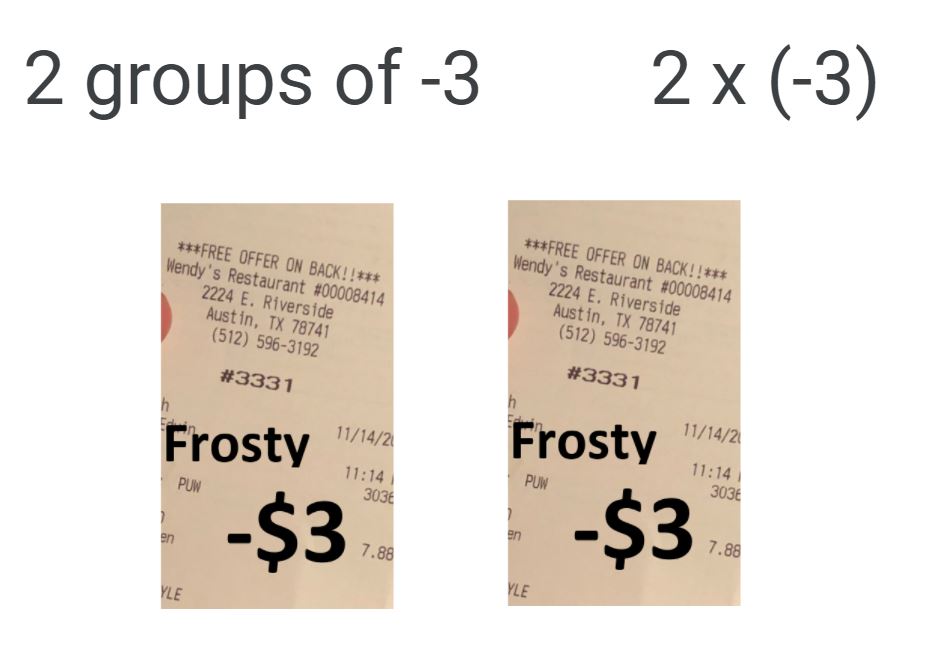
I previously tackled the difference between the ” – ” symbol used to represent a negative and a subtraction problem. This post gets into multliplication through the context of buying a Wendy’s frosty. One comment to preface what is presented here. Negative numbers are abstract and challenging for many students. Multiplying by negatives is even…
-
Multiplication with Integers: a Meaning Making Approach
I previously tackled the difference between the ” – ” symbol used to represent a negative and a subtraction problem. This post gets into multliplication through the context of buying a Wendy’s frosty. One comment to preface what is presented here. Negative numbers are abstract and challenging for many students. Multiplying by negatives is even…
-
Scientific Notation – an Introduction
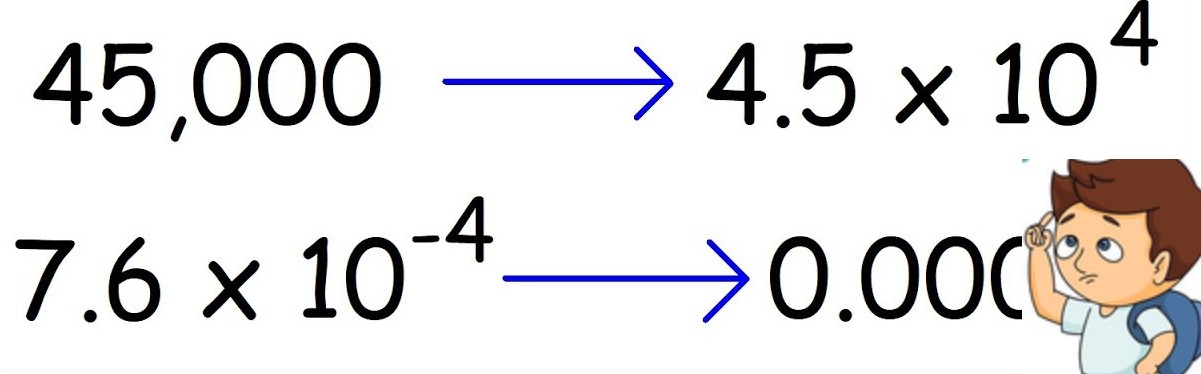
The instructional unit presented in this post is designed to leverage student understanding of money and relationship between denominations. For example, having two $1 bills and one quarter has the same value as one $1 bill and five quarters. Scientific Notation is introduced at the end. Meaning Making My first step in presenting a new…
-
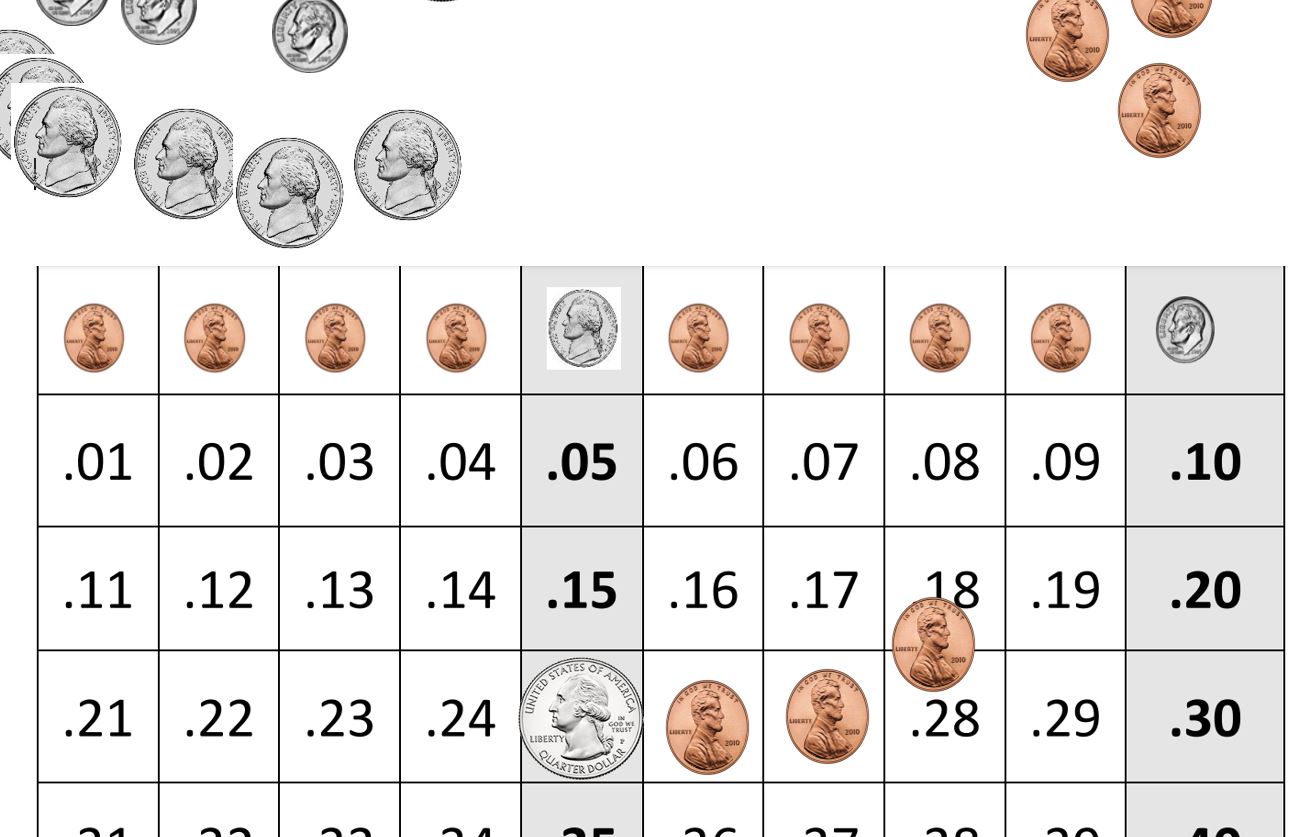
Counting Out Value of Coins
-
Worksheet Websites I Use and Recommend
The following are screen shots of online math worksheet websites I use. The variety and the options in the criteria you select for your worksheets for some of these sites allows for differentiation in the classroom. I will start with my favorite site, Math-Aids.com. This site allows for dynamic selection of criteria for each…