conceptual understanding
-
Speeding Up and Slowing Down on a Graph looking at Velocity and Acceleration
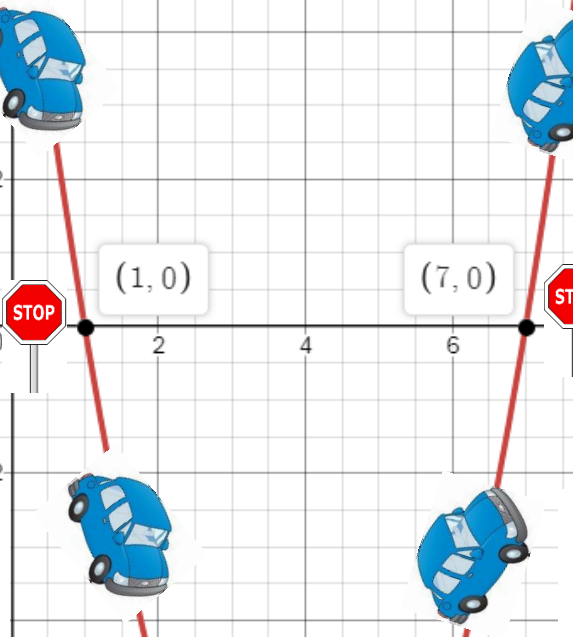
We all understand speed intuitively. Velocity and acceleration are more mathy and harder for many students to comprehend, especially on a graph. Even harder is the idea of when an object is slowing down or speeding up. In this post I attempt to unpack both. Velocity is speed with a direction. Negative in this case…
-
Velocity, Acceleration, Speeding Up and Slowing Down

DISCLAIMER: This is a very mathy, math geek post but it also has value in demonstrating instructional strategies and multiple representations. We all understand speed intuitively. Velocity is speed with a direction. Negative in this case does not indicate a lower value but simply which way an object is traveling. Both cars below are traveling…
-
Lego Fractions
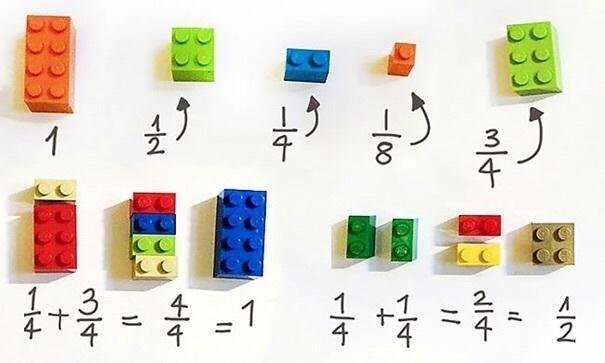
The photo below is courtesy of Robert Yu, Head of Lego Education China, as shared by Jonathan Rochelle, Director for Project Management at Google. The use of Legos shown here is a classic (and wicked clever) example of manipulatives. Before writing the actual fractions students can use drawings as shown below. The sequence of manipulatives,…
-
Concepts vs Skills – Need Both

In general math is taught by focusing on the steps. Conduct a Google search for solving equations and you will see the steps presented (below). You need a video to help your student understand solving and you typically get a presenter standing at the board talking through the examples. (I’ve posted on my approach to…
-
Busy Engagement vs Intellectual Engagement

-
Example of Using Support Class to Support Current Math Content

I have posted on how to effectively provide support for current math topics. Here is an example (below) of how support can focus on both the current topic and prerequisite skills. For example, on the 22nd in this calendar the current topic is solving equations. The steps for solving will include simplifying expressions and may involve…
-
Documents for Task Analysis Presentation – DADD 2017 Conference
-
Addressing the Concept of Addition Part 2
-
A Meaning Making Approach to Word Problems
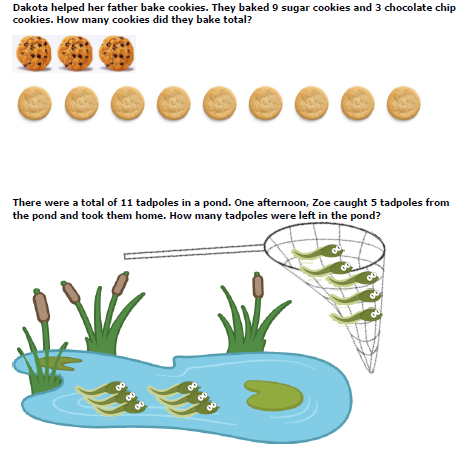
Here is a typical story or word problem. Dakota helped her father bake cookies. They baked 9 sugar cookies and 3 chocolate chip cookies. How many cookies did they bake total? When solving word problem the focus is often on following steps, e.g. read the problem and identify important information. There is also a focus…
-
Math is a Uniquely Challenging Subject