working memory
-
Hack for Multiplication (and division) Facts

A common method to learn multiplication facts is through skip counting. In turn, this is a means of learning division facts (see next paragraph). The challenge for many students is they struggle to learn the skip count routines or cannot engage brute force memorization effectively (e.g., have a working memory deficit). The challenge with multiplication…
-
Retaining Information
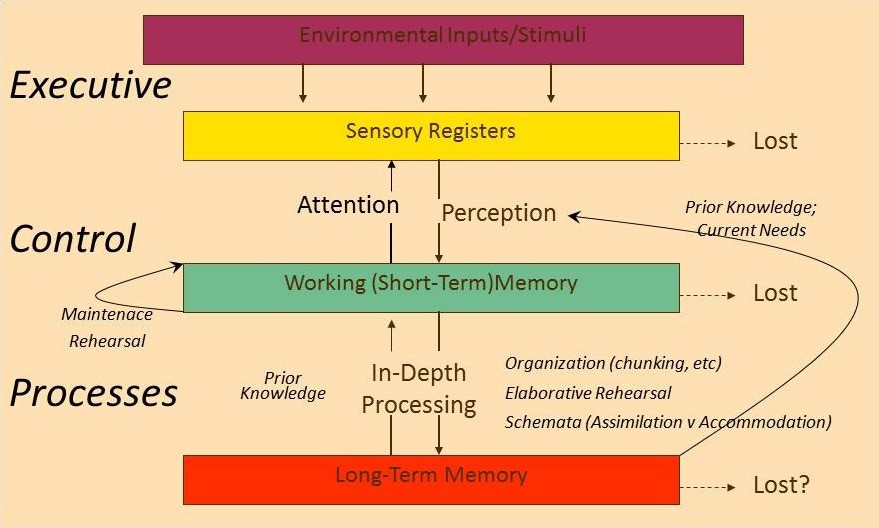
Below is a model for information processing (retention and retrieval). Here are a couple key points I want to highlight: A lot of information is filtered out so what gets through? Information that is interesting or relevant. Information that is connected to prior knowledge, is relevant or that is organized has a better change of…
-
Memory
One model for memory is called the Information Processing Model or Dual Storage Model. Here’s the suggested process in this model in a class instruction context: Our senses receive stimuli. In the classroom students hear the teacher or a classmate talking, see the teacher’s notes or the note being passed to them, smell various things…
-
Color Coding a Table
Color coding is a form of scaffolding. It can be used to highlight specific parts of a diagram or problem or to help differentiate between different parts. Above is my first attempt at using color coding. The 8th grade student simply could not interpret the table to answer the question – “explain the trend…”. I…
-
Chunking a Lesson
Chunky peanut butter means you there are pieces or chunks of peanuts. The peanut butter is broken into distinct parts. Chunking in teaching means breaking a concept or lesson into distinct, smaller parts. This makes it easier for students to process the lesson and the concept. They focus on less content at one time which…