hands-on
-
Place Value Representation
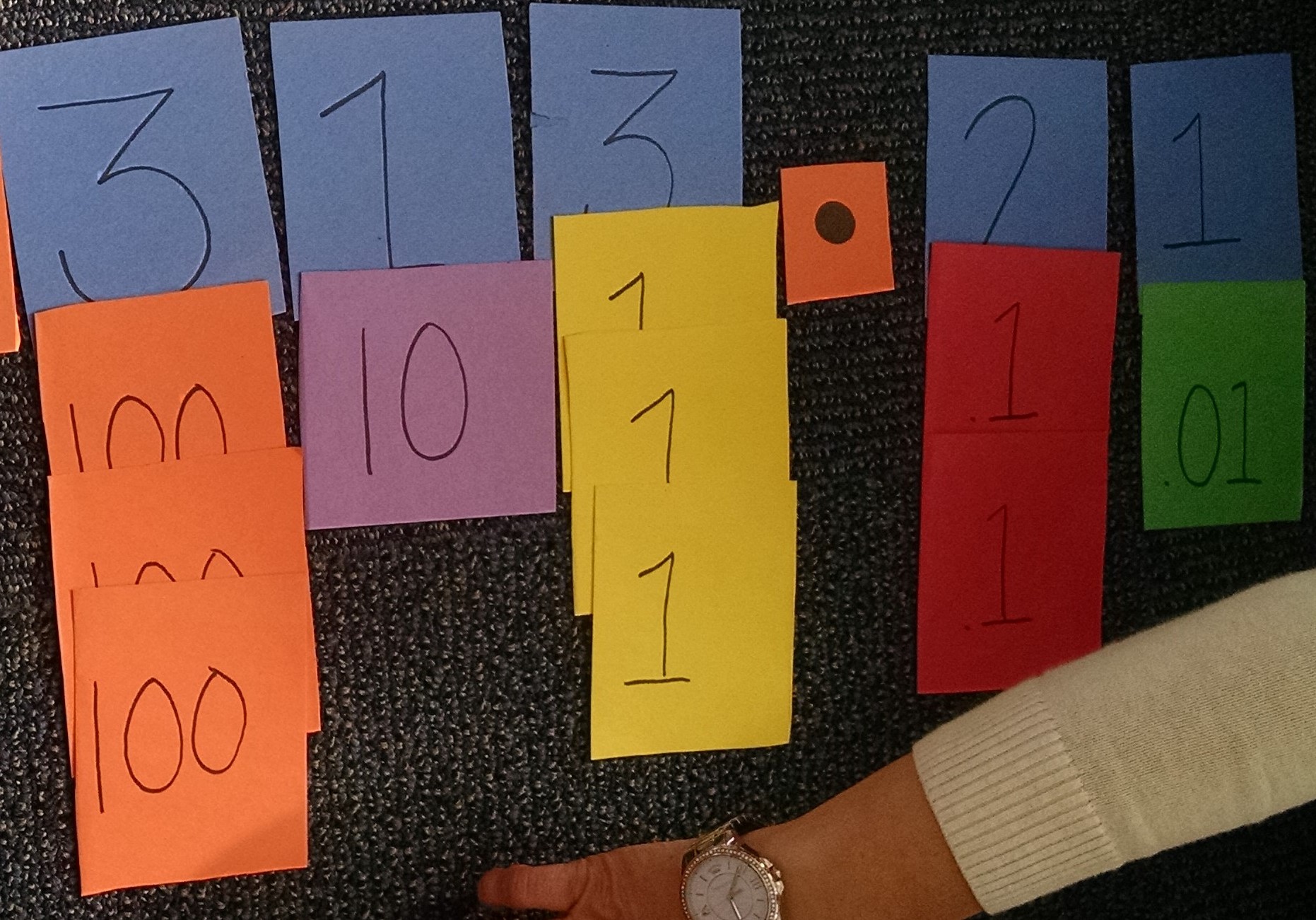
Here is an easy way to create and implement strategy to unpack place value for students (created by one of my former graduate students). I suggest using this after manipulatives and visual representations (drawing on paper) in a CRA sequence. It is hands on but it includes the symbolic representation (numbers). Hence is another step…
-
Cutouts for Area of Irregular Shapes
Students have trouble with irregular shapes largely because they cannot visualize or determine the measures the dimensions of the individual parts. The photos below show a hands on activity to help students with these challenges. The students are cut out the individual shapes and write in the dimensions. This method allows them to see the…
-
Conceptual Presentation of Percents
Percents is a very challenging concept for students often because it is presented in symbolic terms, e.g. 40% of a 25 is what? Students typically understand what 100% and 50% mean. The concept of percent can build on this intuitive understanding. Here is my approach using a Concrete-Representation-Abstract approach (from a lesson…
-
Memory
One model for memory is called the Information Processing Model or Dual Storage Model. Here’s the suggested process in this model in a class instruction context: Our senses receive stimuli. In the classroom students hear the teacher or a classmate talking, see the teacher’s notes or the note being passed to them, smell various things…
-
Representations of Concepts
Three ways to represent perimeter: I taught a lesson on perimeter to a 5th grade class. First I had them create a rectangular pen for their animals and they counted the number of fence pieces. Then we drew a rectangle to represent the pen. Finally we looked at the formula. This allows a deeper conceptual…