color coding
-
Intro to Concept of Functions

Functions are perhaps the most prevalent and important topic covered in secondary math, aside from maybe 1 variable linear equations. The concept of a mathematical function is challenging for many students. This post provides details about a meaning making approach to introducing functions. Overview The introduction is presented on a Google Jamboard, to allow for…
-
Subtraction within 10 – Jamboard
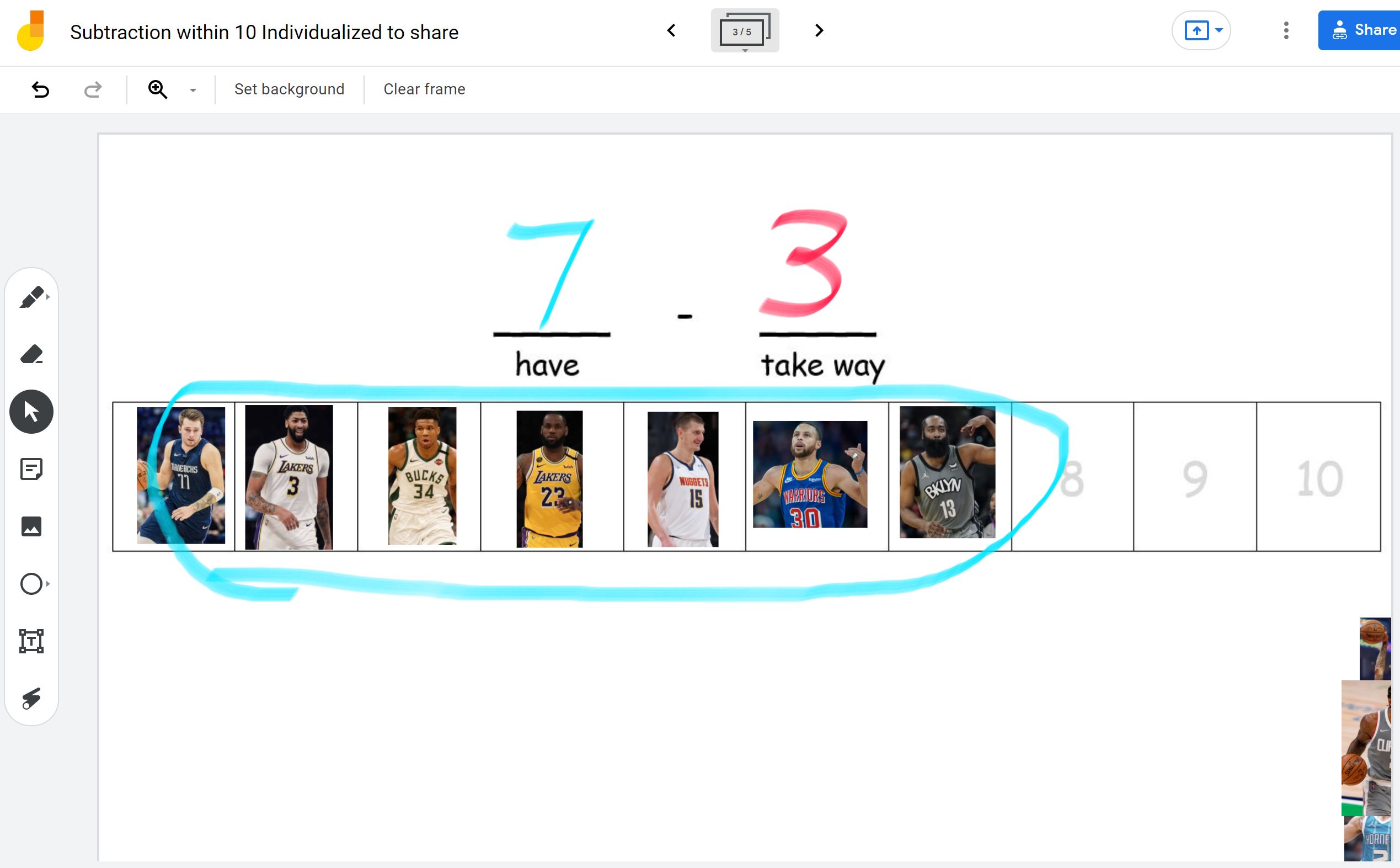
This post presents a Google Jamboard manipulative activity to help scaffold the act of subtraction which helps unpack the concept of subtraction. Overview The Jamboard can be individualized with Google Images. The can allow for context. In this example, maybe the context is there are 7 players and 4 have an injury or on COVID…
-
Intro to Decimals

Tenths vs Tens…Hundredths vs Hundreds. Problematic for many students. I believe this is a conceptual problem. This post provides an approach to unpack the concepts through money in a scaffolded handout. Overview Money is likely prior knowledge for many if not most students, and is a relevant context. This handout attempts to leverage interest or…
-
Simplify Expressions Scaffolded Handout
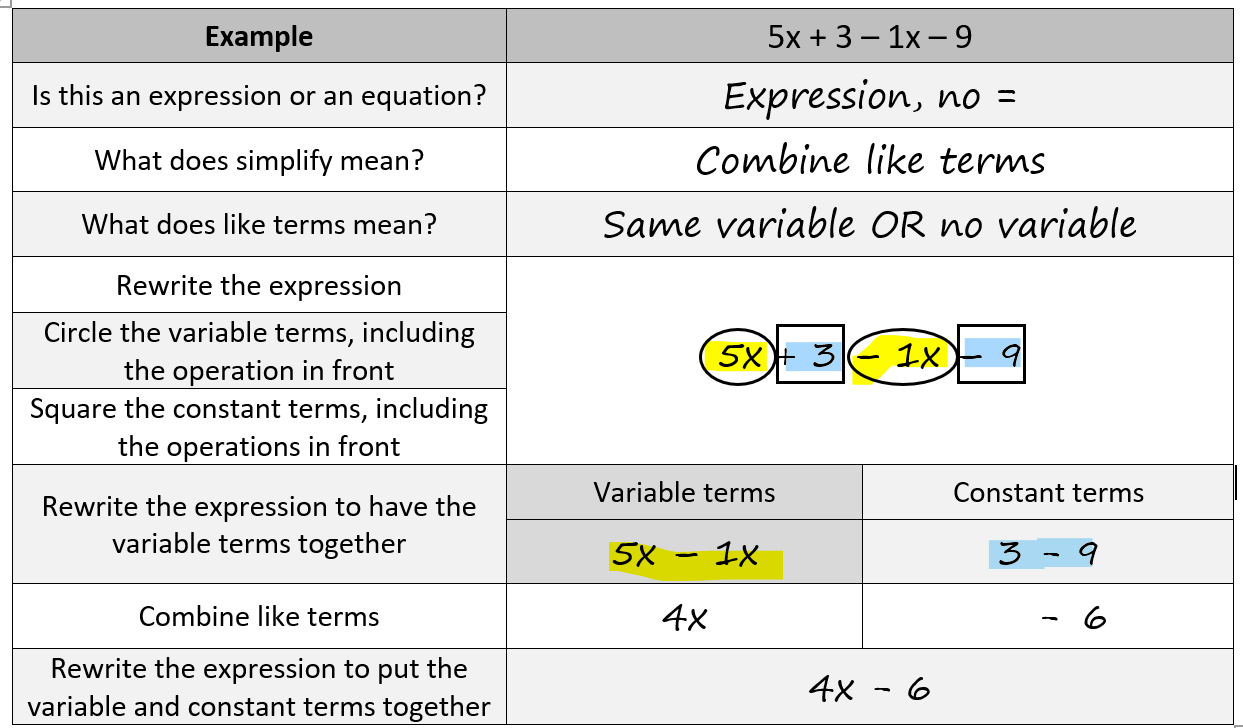
I have found simplying expressions to be one of the most challenging Algebra 1 topics. This post shows a scaffolded handout approach to simplifying. Scaffolding Like Terms I have attempted to provide a deeper understanding of “like terms” in this post. This handout may be a useful follow up or it may be the entry…
-
Systems Word Problems Scaffolded
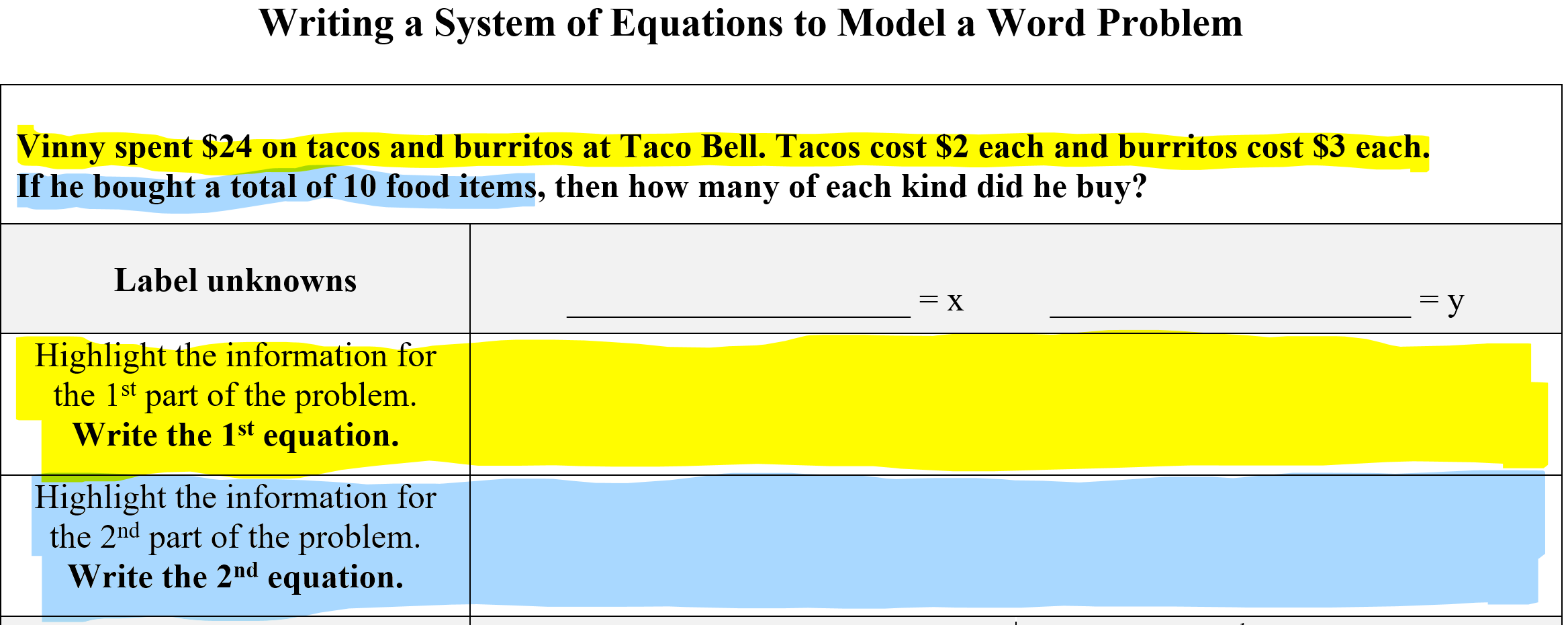
Word problems are challenging for many students. Writing a system of equations to model a word problem has unique challenges. This post provides details about a scaffolded handout with color coding can unpack the process for generating the appropriate system of equations. Unpacking the Word Problem A mistake I have witnessed over the years is…
-
Introduction to Adding Integers

Operations on integers and integers in general is challenging for many students. Negative numbers are abstract. Whole numbers and fractions can be represented with images. The activity presented draws upon student prior knowledge of thumbs up and down in a vote to make negative more accessible. The following images are from a Jamboard. Here are…
-
Multiplication by 2-Digit Factor – Scaffolded and Color-Coded
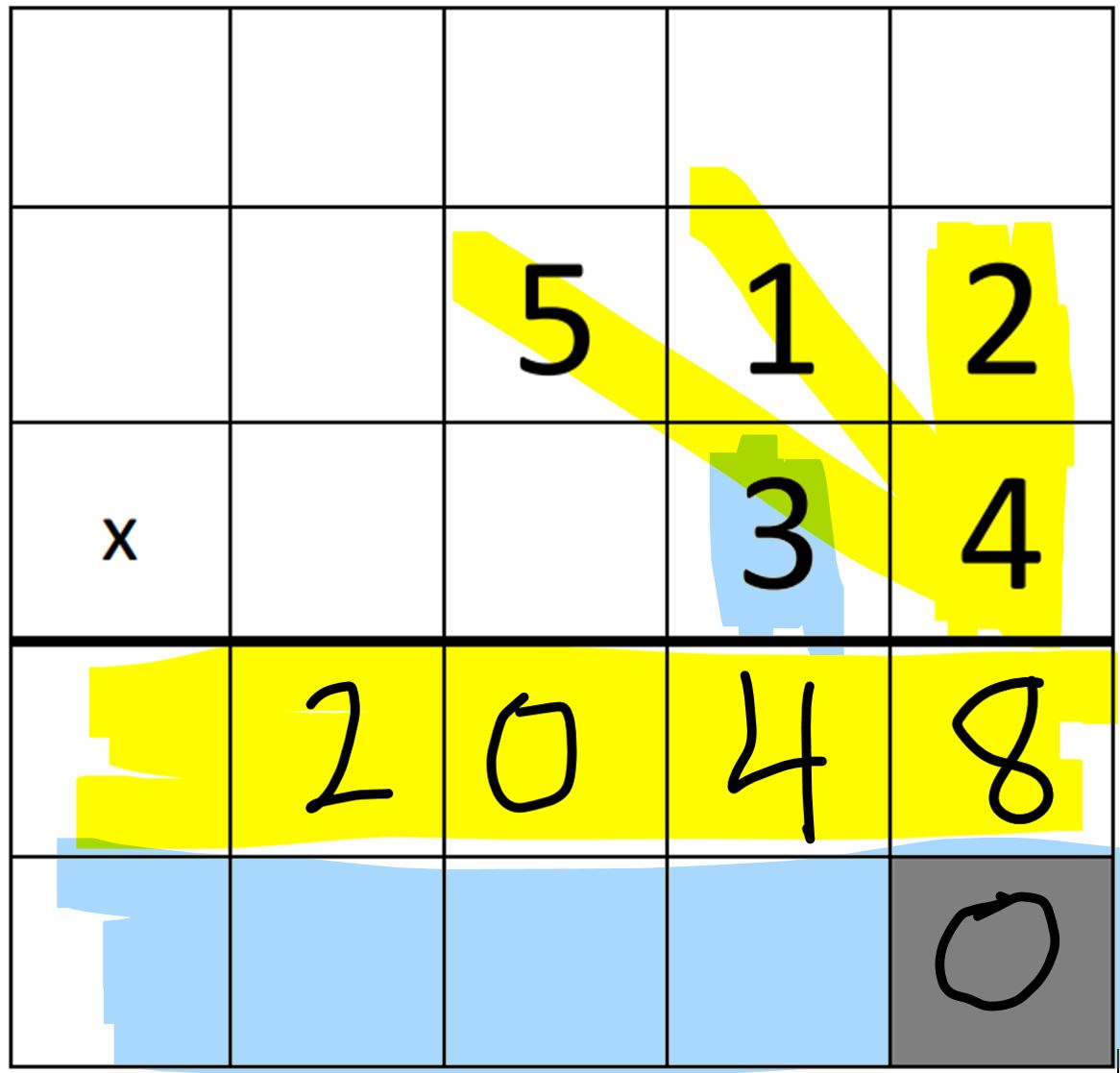
This post details a scaffolded approach for multiplying multi-digit numbers by 2-digit numbers. It was originally created for a student with ADHD who understood how to do the multiplication but would rush and repeatedly made simple mistakes. It is useful for all students. This grid and color-coding strategy was used as a means of slowing…
-
Time on an Analog Clock – a Chunked Approach
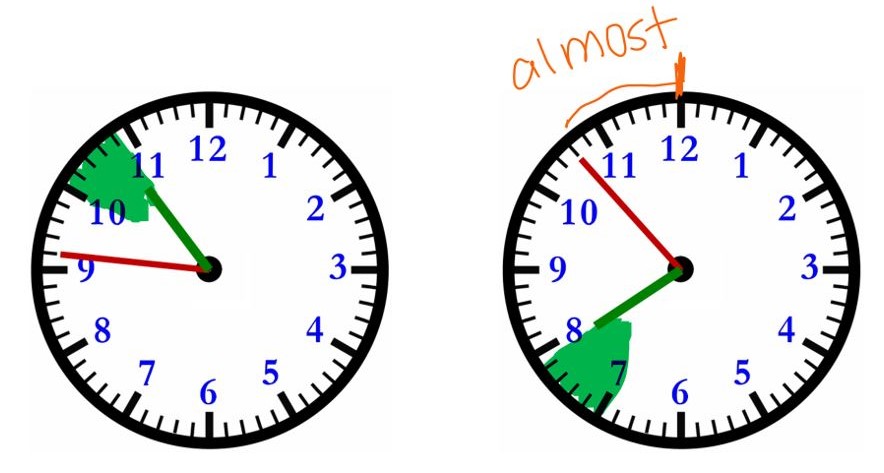
Telling time on an analog clock is challenging for many students, especially some with special needs. I worked with a middle school student with a disability one summer and after a few lessons he scored 100% over two days on telling time. Below shows the progression I used with him. I used a task analysis…
-
Piecewise Functions – Introduction

Here are images from a handout that serves as an introduction to piecewise functions. The focus is to develop conceptual understanding of piecewise before attempting to graph independently. The work is divided into chunks to reduce the level of task demand at a given time in the process. The first section has an application and…
-
Introduction to Key Characteristics of Graphs Using a Rollercoaster

I introduce key characteristics with parabolas and use the analogy of a rollercoaster. Riding once (and never a again) the Superman rollercoaster at Six Flags New England got me thinking about this. At one point the rollercaster hits ground level (a zero) and then goes underground (negative y values). Here is a handout I use…