Behavior Management
-
Developing Perseverance

Perseverance is defined as continued effort despite encountering difficulties. It is identified as the first mathematical practice in the Common Core of State Standards. We encourage and celebrate perseverance. What is missing is developing perseverance, and even defining it. Often, we conflate completion of work with perseverance. Sometimes students complete work but did not have…
-
Classroom Management – Helping All Students

This post was inspired by some posts on teacher Facebook pages by new teachers asking for ideas. Classroom management is a common, if not the most common, issue that arises among teacher candidates and new teacher. It is challenging to some degree for almost all teachers. As a long time teacher trainer for the states…
-
Secondary Characteristics: A Performance Factor
For students with a disability, performance does not align with ability. In my view, there are 3 different categories of performance factors: the disability, gaps in achievement, and secondary characteristics. (Percents are contrived to provide a visual representation.) To address these secondary characteristics, which manifest as a set of behaviors, I suggest a focus on…
-
Long Term Effects of Disabilities
-
Token Sheet to Address Target Behaviors
Perhaps the vast majority of students with disabilities need support with math. Their challenges with math can be directly related to their disability or can be the result the effects of an ongoing struggle with math. The later results in what is termed secondary characteristics. When I work with students with a disability, I first…
-
Secondary Characteristics – Math Anxiety

Watch the video of 2 students, 1 with ADHD. You will notice differences. Some differences are directly related to ADHD. Others are the result of secondary characteristics. In special education these are characteristics of a student that result not from the disability but from how the disability plays out in an academic and other settings.…
-
Meeting Needs Part 2

In the past year I have helped two 7th grade students who are categorized as twice exceptional (2e). Both had more severe math anxiety that impacted their performance and masked their ability. When we started both were working on elementary school level math. Within a couple of months both were working on algebra. (Both had…
-
Performance vs Ability
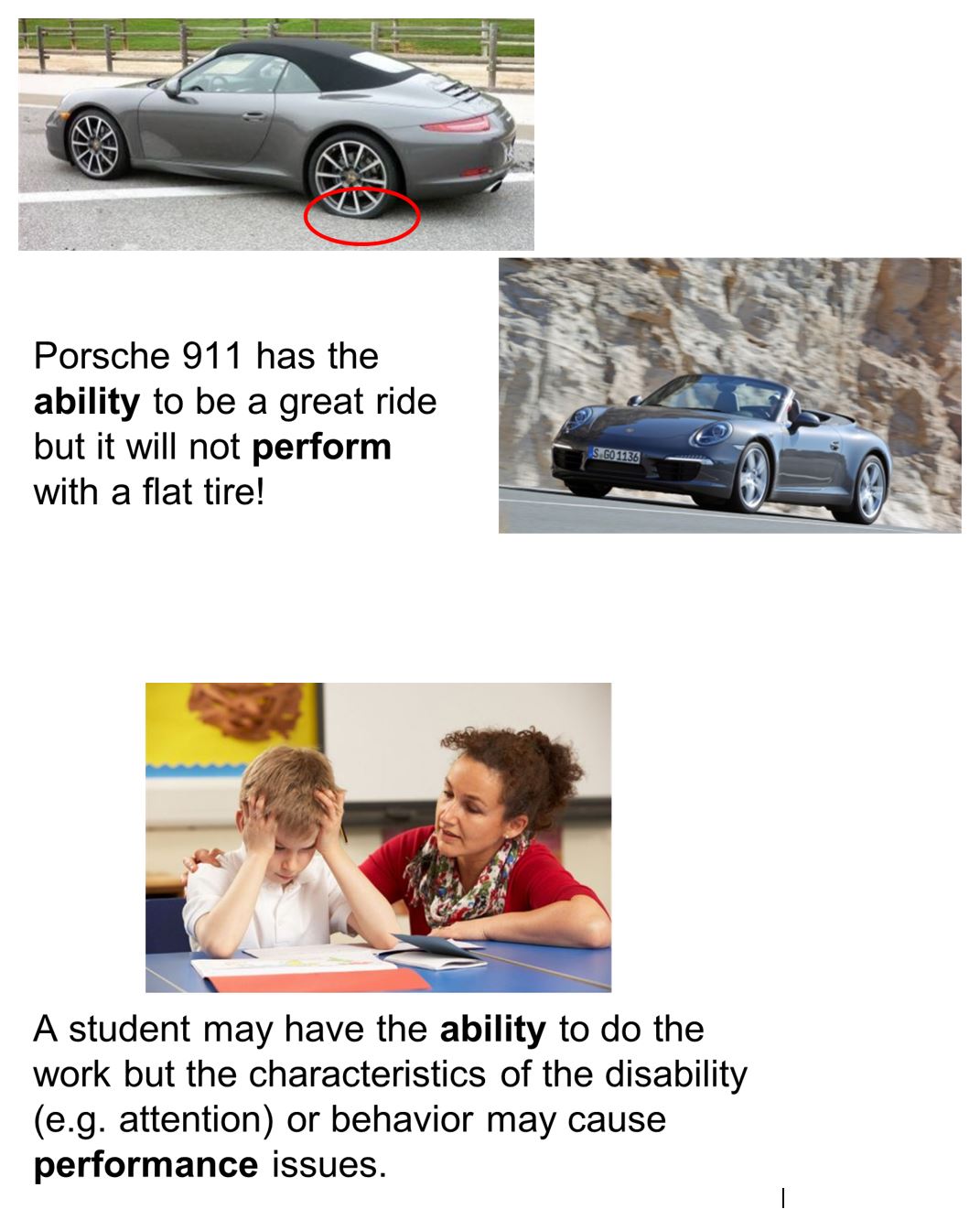
In the effort to assess student ability performance factors are likely present. It is incumbent upon the educators to mitigate the performance issues to assess true ability. For example, I conducted an evaluation on a student in middle school who has ADHD. All of her testing records indicated that she would lose focus during the…
-
List of Performance Points
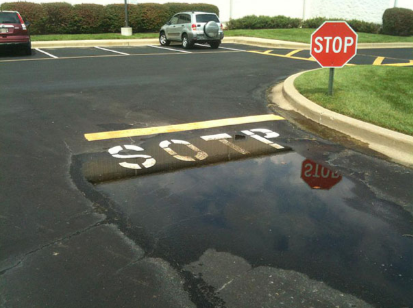
Painting the letters on the ground is a performance point for the person responsible for this task. The task was discussed at some other time and location. Performance points, as explained in another post, are the situations or locations or times that a person has to perform a task. For students with special needs…
-
Address Skills at Performance Points
In the photo above you see a contrast between how children learn and how educators often teach necessary skills. Children learn to ride a bike by actually performing the target skills. This is a performance point – the setting in which the child actually performs. In school students are often taught necessary skills in isolation,…